Category: HEC GLobal Learning Centre

  • Global Learning London

    Global Learning London

    About Global Learning London

    Global Learning London (formerly HEC Global Learning) was incubated in the Tower Hamlets Schools Library Service (THSLS), of which we remain an integral part. Our work stands on the shoulders of giants. While still in the womb, we fed on stories, books, public service, curiosity and wonder. We continue to fly the flag for THSLS and all other libraries from which we, and so many other sparks, were born.

    What we do

    We work with children, young people and their wider communities, to cultivate optimism and action for a more just and sustainable world.

    Why we do it

    We believe that a kinder, more equitable world is possible, one where people and planet thrive to their full potential and beyond.

    How we do it

    • We work together with teachers and schools to open up spaces for learning and enquiry into how to be better facilitators for our children’s growth and where global perspectives and indigenous wisdoms are central.
    • We create workshops, festivals and encounters to forge connections between children, young people and their local communities. We ensure families, small local businesses, and community are part of the conversation, and that children’s voices flow into them, and are amplified within them.
    • We plant seeds for learner-led projects, then move out of the way and cheer them on as they grow. We seek to create environments where we are all learners – where power is truly shared.
    • We change systems. We lobby government and local councils to reform education, from the bottom up.
    • We do all this with curiosity, creativity and critical thinking, and with art and culture at the heart.
    • We are not afraid to challenge and be challenged. Because our cause is greater than our fear.

    For more about our projects and to get involved, visit www.globallearninglondon.org

    What is Global Learning?

    Global Learning, or Global Citizenship Education, aims to empower learners to engage and assume active roles locally, nationally and/or globally, to face and resolve global challenges and ultimately to become proactive contributors to a more just, peaceful and sustainable world. It builds on a diversity of world views and indigenous wisdoms to foster the knowledge, skills, values, attitudes and behaviours towards a kinder, more regenerative way of life.

    Global Learning is a key element of Target 4.7 of the Sustainable Development Goal 4 on Education: to ensure all learners acquire knowledge and skills needed to promote sustainable development, including among others through education for sustainable development and sustainable lifestyles, human rights, gender equality, promotion of a culture of peace and non-violence, global citizenship, and appreciation of cultural diversity and of culture’s contribution to sustainable development.

    [associated_posts]
  • Contemporary Arab Arts in the curriculum

    Contemporary Arab Arts in the curriculum

    The Arab British Centre and HEC Global Learning are delighted to introduce their collaborative education resource, Exploring The Curriculum Through Contemporary Arab Arts: A Global Citizenship Guide for Schools, launched in July 2019.

    Over nearly 2 years, the Arab British Centre and HEC Global Learning have worked together and in schools to develop this resource which supports teachers with references to and examples of Arab arts and culture, all of which can be used within the National Curriculum. We’ve worked extensively with teachers themselves to devise this resource, which aims to showcase the diversity of the region, and the positive, contemporary contributions to arts and culture that artists from the region are making, from feminist hijabi rappers like Mona Haydar, to city-wide calligraffiti by El Seed.

    The Arab British CentreIn September 2017 a YouGov poll commissioned by the Arab News and the Council for the Advancement of Arab British Understanding illustrated worrying attitudes and misunderstandings of Arabs and Muslims in Britain. Of the 2142 British voters polled in the survey, 63% stated that they believe Arabs have failed to integrate themselves into British Society, and 41% believed that their presence has not been beneficial. Despite these strong opinions, 81% admitted that they knew little or nothing about the region. This Education Resource aims to provide a counter narrative to prevalent negative stereotypes, and introduce children to the Arab world in a positive way which encourages thought and understanding of all the globe’s citizens.

    Featuring resources and exercises for subjects including Literacy, Numeracy, Geography and more, the pack is specifically targeted for Key Stage 2 learners, but is adaptable to children – and adults! – of different ages and educational needs.

    DOWNLOAD THE RESOURCE HERE

  • Shahnameh Box

    Shahnameh Box

    If you would like borrow one of these boxes for a term please fill in a request form or contact the library directly.

    The Shahnameh Box will be available from April 2019.

    The Phoenix of Persia by Sally Pomme Clayton, illustrated by Amin Hassanzadeh Sharif is an epic legend from Shahnameh, a collection of myths by the 10th century Iranian poet Ferdowsi. With echoes of Snow White and firebird folklore, a young prince is banished to the forest and is brought up by the benevolent phoenix Simorgh.

    Storytellers in Iran would often tell the stories of Shahnameh to the accompaniment of music.
    Tiny Owl’s new book The Phoenix of Persia introduces original music by Iranian musicians Nilufar Habibian, Saeid Kord Mafi, Arash Moradi and Amir Eslami, led by composer Soosan Lolavar and Dr Laudan Nooshin, set to a narration by Sally Pomme Clayton — available free to download.

    To celebrate the publication of The Phoenix of Persia, our free resource The Shahnameh Box explores one of the greatest epics of world literature and its history to promote cultural understanding and a more positive image of Iran and the surrounding region for young children.

    It supports creative and critical learning, the study of history and citizenship from social justice to human rights, diversity and the other key concepts of development education.

    The Shahnameh Box is a free resource for schools and includes:

    • Book: The Phoenix of Persia
    • Book: Bijan and Manije
    • Book: I is for Iran
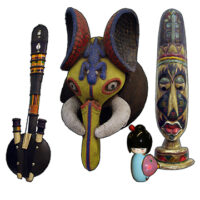
    • Ney (Iranian flute)
    • Frame drum
    • Iranian Material
    • Mosaic tiles
    • Iranian coins in a red velvet pouch
    • Dried rose petals
    • Examples of modern miniatures by Farschian and poems in Farsi by Hafez.
    • The Chain Game (laminated sheets)
    • Meet the Poet (laminated sheets)
    • Printed copies of the teacher resources (20 page booklet)

    If you would like borrow one of these boxes for a term please fill in a request form or contact the library directly.

    The Shahnameh Box will be available from April 2019.

  • The Global Dimension

    The Global Dimension

    Golbalbanner1Resources to support teaching of the global dimension

    Global Learning London and The Schools Library Service have worked together to select resources to support teaching the Global Dimension.

    The links below relate to the 8 strands of the global dimension. Each link searches our catalogue for the relevant keyword and will display resources currently in stock and their availability.

    Global citizenship

    Gaining the knowledge, skills and understanding of concepts and institutions necessary to become informed, active, responsible citizens.

    Diversity
    Understanding and respecting differences and relating these to our common humanity
    Conflict resolution
    Understanding the nature of conflicts, their impact on development and why there is a need for their resolution and the promotion of harmony.
    Social justice
    Understanding the importance of social justice as an element in both sustainable development and the improved welfare of all people.
    Values and perceptions
    Developing a critical evaluation of representations of global issues and an appreciation of the effect these have on people’s attitudes and values.
    Sustainable development
    Understanding the need to maintain and improve the quality of life now without damaging the planet for future generations.
    Interdependence
    Understanding how people, places, economies and environments are all inextricably interrelated, and that choices and events have repercussions on a global scale.
    Human Rights

    Knowing about human rights including the UN Convention on the Rights of the Child.

    See also:

    [associated_posts]
  • Story Tents

    Story Tents

    Story tent banner

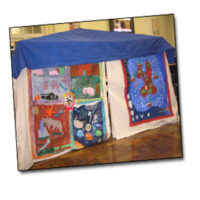
    The story tents were developed by the HEC Global Learning Centre – now Global Learning London – in partnership with several Tower Hamlets schools. These tents are available to borrow for your school for a whole term or just for a few days. They can be used as part of a class topic or with a professional storyteller.

    Full details of storytents (pdf document)

    Each story tent contains:

    • Eight illustrated side panels
    • A box of supporting resources
    • Teacher’s information pack including:
    • background information
    • how to utilise the ‘StoryTent’ as a class, year or whole school initiative
    • National Curriculum schemes of work
    • literacy hour lesson plans
    • ideas and activities
    • details of cross-curricula links
    • Instructions for putting up your tent