Category: Blog

  • (blog) A House Without Walls

    (blog) A House Without Walls

    A House Without Walls by Elizabeth Laird

    A House Without Walls is a powerful story of family, hope and redemption amidst the refugee crisis in Syria from the award-winning Elizabeth Laird.

    Thirteen-year-old Safiya and her family have been driven out of Syria by civil war. Safiya knows how lucky she is – lucky not to be living in a refugee camp, lucky to be alive. But it’s hard to feel grateful when she’s forced to look after her father and brother rather than go back to school, and now that she’s lost her home, she’s lonelier than ever.

    As they struggle to rebuild their lives, Safiya realises that her family has always been incomplete and with her own future in the balance, it’s time to uncover the secrets that war has kept buried.

    It is beautifully written from the eyes of a 13 year old girl. So many eye opening life lessons in there for the younger reader without being overly sad/emotional/traumatic.

    The story has some twists and turns and plenty of action as well as descriptions about how she feels about everything from learning to cook to the cold damp living conditions she finds herself in. I really loved Safiya. She was a very honest character and well written as a thirteen year old. The book shows both funny moments for her, angry and sad and clever moments when she really is quite sneeky.

    If you liked The Boy at the back of the class you are sure to love this one

  • (blog) The House of Light

    (blog) The House of Light

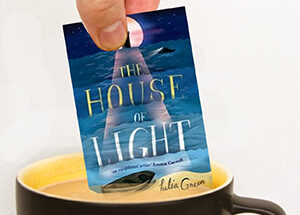
    The House of Light by Julia Green

    You can almost smell the salt and feel the wind: a celebration of the great outdoors – The Daily Mail

    I wonder whether any Daily Mail readers actually reading this book were disapointed that they didn’t end up with some kind of follow-up to ‘Swallows and Amazons’. Or perhaps they DID get this follow-up, albeit one set in a subtle dystopian future built upon the politics espoused by… The Daily Mail.

    Oh, the irony.

    After all, there are strong shades of Brexit here – with the principal villains of the piece being the border guards, on the hunt for Ish who has washed up on the shores illegally. Of course, this is just my take on things – a commentary on the ongoing arguments that Brixitannia can’t be a bad place at all. If it were, then refugees and immigrants wouldn’t want to come here.

    There are also hints of the hostility toward climate-change school protests (the main character is continually hounded for not being present in school). It’s at this point that (for me), a few months have turned The House of Light from ‘a cutting commentary on the politics and ethics of Brexit, isolationism and xenophobia’ to ‘damn. This is disturbingly uncanny.’, because this dystopia is also apparently one where medicine has failed and antibiotic-resistant illness is rampant.

    However, this is not a tale about a character being ground down by dystopia, it’s about a character who sidesteps and escapes from this cage of agression, anxiety and lack of imagination out into the natural world. Its a story of courage vs adversity and – also uncannily appropriate in these Extraordinary Times(™) – about a reconnection with nature and the wider world that has been otherwise denied to us.

    So – is The House of Light a perfect lockdown book? I think it is – and it’s also a perfect post-lockdown book. What other books do you feel could accompany it?

    [associated_posts]
  • (blog) Planet Omar: Unexpected Super Spy

    (blog) Planet Omar: Unexpected Super Spy

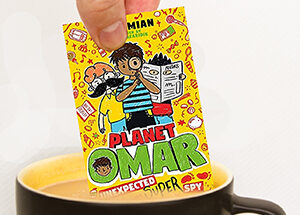
    Book Review: Planet Omar: Unexpected Super Spy by Zanib Mian

    My kids loved Planet Omar: Accidental Trouble Magnet for its loving ‘own voices’ immersion in a British Pakistani family adapting to life in a new town, new school and the ups and downs that brings and my children are so pleased to say that Omar has returned better than ever and with wonderful illustrations from Nasaya Mafiridik.

    You can’t help but love Omar whether he is caught sneaking down to play X-Box after bedtime or giving his mum the most creative full-sensory spa treatment ever.

    In the original Planet Omar, Zanib Mian embedded into the story details and explanations about British-Pakistani and British Muslim life within a frankly gorgeous and loving family. This book similarly explores concepts to celebrate diversity with young British Pakistani and Muslim children recognising themselves in Omar’s family and the way they have both British and Pakistani-Muslim elements

    Planet Omar Unexpected Super Spy is a super-cute, fun packed illustrated adventure through the life of Omar as he shines and struggles but always with kindness and good intentions in his heart.

    Omar and his friends have been saving up their pocket money for ages so they can have the world’s most epic Nerf Blaster battle. But when Omar discovers that his mosque is in trouble, they decide to donate their pennies to help save it.

    Then they try to raise some more money by:
    Doing some chores (boorrring)
    Selling some home-made cookies (deeelicious)
    Holding a talent contest (YESSSSSSS)

    Everything goes PERFECTLY until the money mysteriously goes missing. Can they work out who has taken it in time to stop the mosque closing down?

    And what exactly is Omar’s sister Maryam hiding in her room…?

    The use of the illustrations/typography would make this book accessible to younger children/children who struggle with reading the author makes the reader feel like they were inside the mind of Omar and could relate to what he was going through. The humorous nature of the text helped to sensitively touch on issues such as racism, stereotyping and different cultures. I loved the story of this one and how amazing Omar and his friends were in trying to save the mosque – it was very heart-warming. I could read these books over and over again, they are fun and informative. Very excited for book 3!


    This book is perfect for fans of Tom Gates and Wimpy Kid.

  • (blog) Malamander

    (blog) Malamander

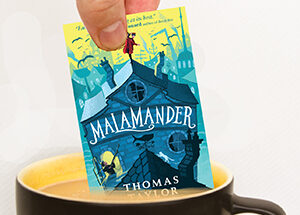
    A visit to Eerie-on-Sea in Malamander by Thomas Taylor

    I somehow missed the map of (Ch)Eerie-on-Sea on my first read of Malamander. I only noticed it afterwards and I’m glad I did because it really confirmed just what a brilliant pocket world Taylor has created and literally mapped out. Malamander was written by an illustrator and it shows. The book goes out of its way from the start to conjure up a vivid visual impression of the place, and it cements its peculiarities by turning expectations of a seaside town on their head.

    The seaside town is a wonderfully peculiar English institution that’s often rather overlooked in favour of the city but can offer many avenues for creativity. They have the contrast of opulence in their grand hotels on the promenade with the grinding poverty of the run-down backstreets, they have the eccentricities of strange shops tucked away in narrow crooked streets that slope sharply down to the seafront, or of the wonderfully dodgy piers and the amusement arcades. A curious mixture of timeless fun and seediness, the traditional and the time capsule buried in the sand. Immortalised in cheap picture postcards, we’re immediately at home with the idea of the people who inhabit these places to be somewhat strange or extraordinary.

    The genre of magical realism, used incorrectly, can result in the reader feeling as though they’ve had the rug pulled out from under them when the normal rules of the real world start breaking down. Sometimes this can be intentional but more often than not it can feel jarring and out of place. Eerie-on-Sea, within the opening passages of the book, is set up as a place where we should not only fully expect this rug to be pulled from under us, but that it will most likely be followed up by a slap in the face by a large wet fish and a dunking in the ocean.

    For a start, we have to visit Eerie-on-Sea in the grip of a bitter winter, so immediately all of our preconceptions of the seaside are thrown out of the window into the cold and we’re forced to scrub away our mental image of sunshine and ice cream.  The seaside town in winter is a ready-made ghost town, complete with rolling banks of mist, locked and shuttered shops and houses, and only a few choice eccentrics at large. We’re immediately unsettled and out of our comfort zone.  Taylor seems to build his town out the driftwood and odds and ends and lost stories that have been washed up on the beach – this is a place where things end up – and populates it with the only people who could really belong there and gives them names to match. In fact, these characters are just as much a part of their town as the mists and the seaweed and the pier – as though they’ve grown up out of the place and couldn’t really exist anywhere else. They’re imbued with the magic of their home and, rather like Neil Gaiman’s naming of characters in ‘Neverwhere’ after locations in London or people associated with the city (Hammersmith, Old Bailey, and (Richard) Mayhew ).

    First we have Herbet Lemon and Violet Parma. (s)Herbet might as well have been in Eerie-on-Sea since the Victorian era when the town first became a popular tourist destination and his namesake was being sold from jars in seafront sweet shops. Violet Parma is another antique sweet, but also a rather exotic plant, giving her somewhat more mystery than plain old lemon.

    I thought at first that Jenny Hanniver (working in the book repository) was just a nod to Philip Reeve’s Mortal Engines books, but then I discovered that a Jenny Hanniver is (and I quote) “the carcass of a ray or a skate that has been modified by hand then dried, resulting in a mummified specimen intended to resemble a fanciful fictional creature, such as a demon or dragon.”

    Well. That certainly adds to the atmosphere, doesn’t it.

    And then of course we have the (slippery) Sebastian Eels, and The Boathook Man, and Captain Kraken and a whole host of others. Like everything else in the book, Malamander wears these exaggerations proudly. The reader is kept on their toes knowing that real things can happen to imaginary people, but at the same time has a lot of fun recognising jokes and deeper references in something as simple as a name – it’s a very playful writing technique that is much more fun (and less pretentious) when used in children’s fiction. Just like Gaiman’s work, Malamander is a contemporary urban myth that hovers between realism and fantasy, and so it is quite within its rights to take all sorts of liberties with characters and setting that wouldn’t be allowed elsewhere and I found this far more engaging than other books in the genre precisely because it was prepared to not take itself too seriously. And so when bizarre and impossible things begin to happen, they seem far more believable. These are people and goings on that we’ve heard about second hand from someone none too reliable, but they’re so strange it must be real.

    I’ve visualised Malamander as being perfect for a stop-motion animation, but perhaps this is just because I once worked on an animation project involving a seaside (literal) tourist-trap populated by cannibals. It’s one of those worlds which is at once enticing and unpleasant, familiar and otherworldly – rather like the reflection in a half-forgotten hall of mirrors tucked away on a rickety pier.


    Anyway – feel free to leave a comment and tell people what you think helps to build a good fictional world that you’d want (or not) to visit.

  • (blog) The Girl who Speaks Bear

    (blog) The Girl who Speaks Bear

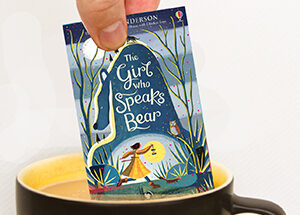
    The girl who speaks bear by Sophie Anderson

    Yanka is aware of the differences between her and the other people in the remote village on the edge of the Snow Forest.  She’s got a lot of unanswered questions in her life stemming from the fact that for the first two years she was brought up by a bear, so who or what is she really?  Mamochka found her by the bear cave and took her in, and Sasha is Yanka’s closest friend whom she cares for deeply, but can she be sure they really love her for what she is?  Anatoly is an occasional, charismatic visitor in her home and spins tales of dragons, wolves and animal transformations that spark a kind of folk memory in her own mind.  Soon events come to a head at the village festival, and an accident to Yanka leads to things happening outside her control…her legs have changed to bear legs…and she begins a journey through magical places to confront the source of her difficulties.  She finds new friends in the natural world, wolf, elk, owl, and they form a team of many strengths yet alone they had each been vulnerable.

    This is a beautifully told story with imaginative power.  The ordinary fears of a young girl growing up are taken to a fantastic and sometimes scary place and Yanka is a bold, questioning protagonist who knows she must forge her own path.  It’s a bit like the Wizard of Oz, you must leave home to find out how dear home is to you, and you have extraordinary friends on the way to help and whom you encourage too.  It’s pleasingly constructed with the main story full of dramatic turns interwoven with a thread of folk tales that stand alone but also connect.  These reach a most satisfying conclusion and answer the question of Yanka’s origins.  The House with Chicken Legs, Sophie Anderson’s first novel, even makes a reappearance which will please her fans.  I think I actually prefer The Girl Who Speaks Bear, perhaps because the first book was a little ghoulish for me.  What do you think?  This book is part of a genre of Russian or northern European tales with a vaguely historical, folky, mystical place in the deep woods quality.  Others to recommend are Wolf Wilder by Katherine Rundell, The Wolf Princess by Cathryn Constable, North Child by Edith Pattou, Nevertell by Katherine Orton (is there something about writers called Catherine that calls them to spin Russian stories?).  What other books would you add to the list?

  • (blog) Christmas traditions

    (blog) Christmas traditions

    Christmas is a time of unashamed nostalgia – whether it’s digging out the favourite decorations, or celebrating Victorian-era child abuse via TV adverts for a supermarket. With this in mind, I feel no guilt in waxing lyrical about my two favourite Christmas picture books of all time.

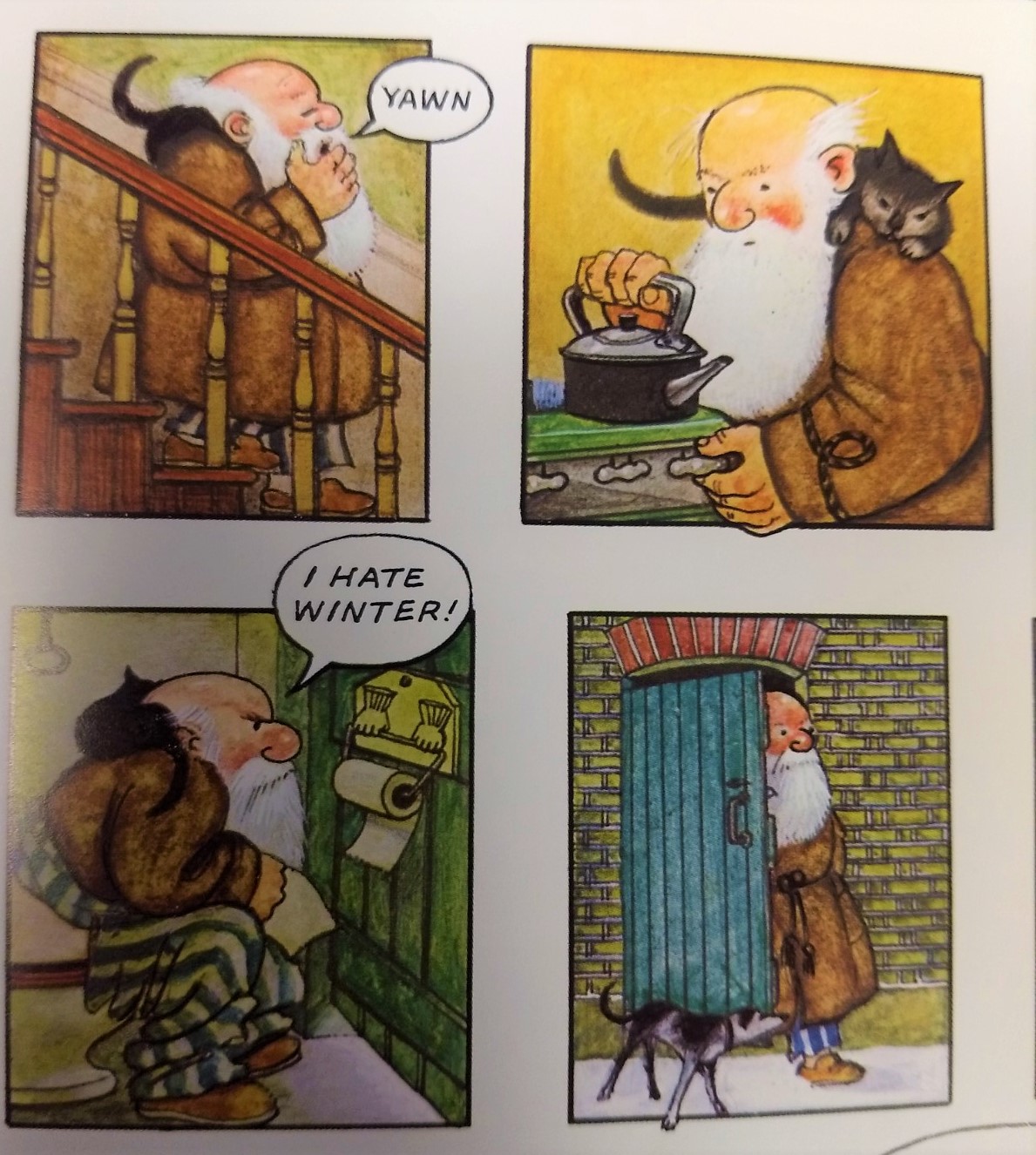
    First up is Father Christmas by Raymond Briggs. Father Christmas is a work of utter genius. In many ways it’s the inverse of so many of Briggs’ other stories, in which a child – for a short while – comes into contact with a fantastical being, be it a polar bear, a snowman, a gruff tiny man or a man selling puddles. After a day, night or just a few minutes, this character disappears from the child’s life forever and both child and reader is left wondering things like “Where did they come from?” and “Where are they now?”, and both child and reader are left changed forever by the experience.

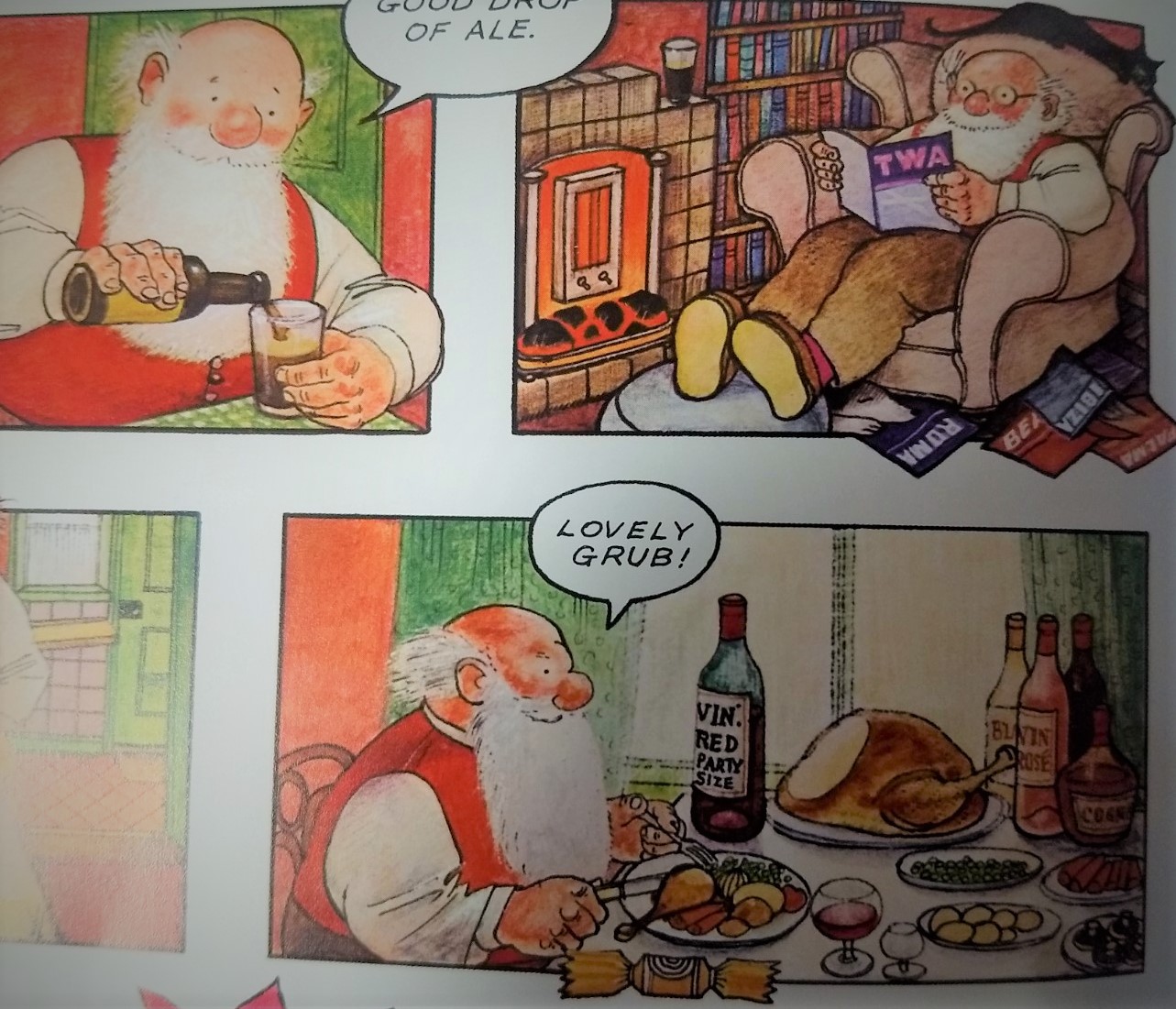
    In “Father Christmas”, rather like “Fungus the Bogeyman”, the reader sees the story from the point of view of the visiting, magical, character. This could have been another Briggs book in which Father Christmas – grumpy and overworked – squeezes out of the fireplace to encounter a wide-awake child and the two have adventures together before Santa vanishes again. Instead we’re reading Briggs’ touching tribute to his milkman father, Ernest (himself appearing towards the end of the book), and – like Fungus – Father Christmas is another working class hero, though with more practical and straightforward problems to be grumpy about – the weather, the practicalities of chimneys – rather than Fungus’ philosophising or Ug’s family troubles. We see the hidden side of these fantastic, legendary characters, and we see that they’re not much different from us – they look forward to summer holidays, they don’t like rubbish gifts, and they go to the toilet.

    This Father Christmas emphasises the ‘Father’ part – stereotypically, at least, and even though he appears to have no family aside from a cat, dog and his reindeer – the everydad who grumbles about going to work in the morning and grumbles about it some more when he gets home later, but who most certainly loves his job and cares about doing it well. And he’s a great cook, too – I can’t think of another Christmas book that features such an appetising-looking Christmas dinner.

    They say that there are three ages to man – firstly you believe in Father Christmas. Then you are Father Christmas. Finally you look like Father Christmas. I’m currently in stage two – working behind the scenes to keep the magic of Christmas alive for the family and moaning about whether it’s really worth all the effort even though I know (all being well) it’ll be great in the end. Briggs is saying that we can all be Father Christmas, and I’m pretty sure he sees a lot of himself as well as his father in the character. Briggs consistently brings this very human touch to his characters – mythical figures like Santa Claus are brought town to Earth with a bump, but they’re made all the more real for this. So much about Christmas these days is packaged away behind a glossy sheen, and sometimes we just need to step back and drop a “Blooming Christmas” every now and again.

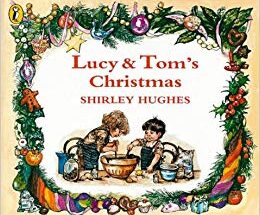
    Lucy and Tom’s Christmas by Shirley Hughes

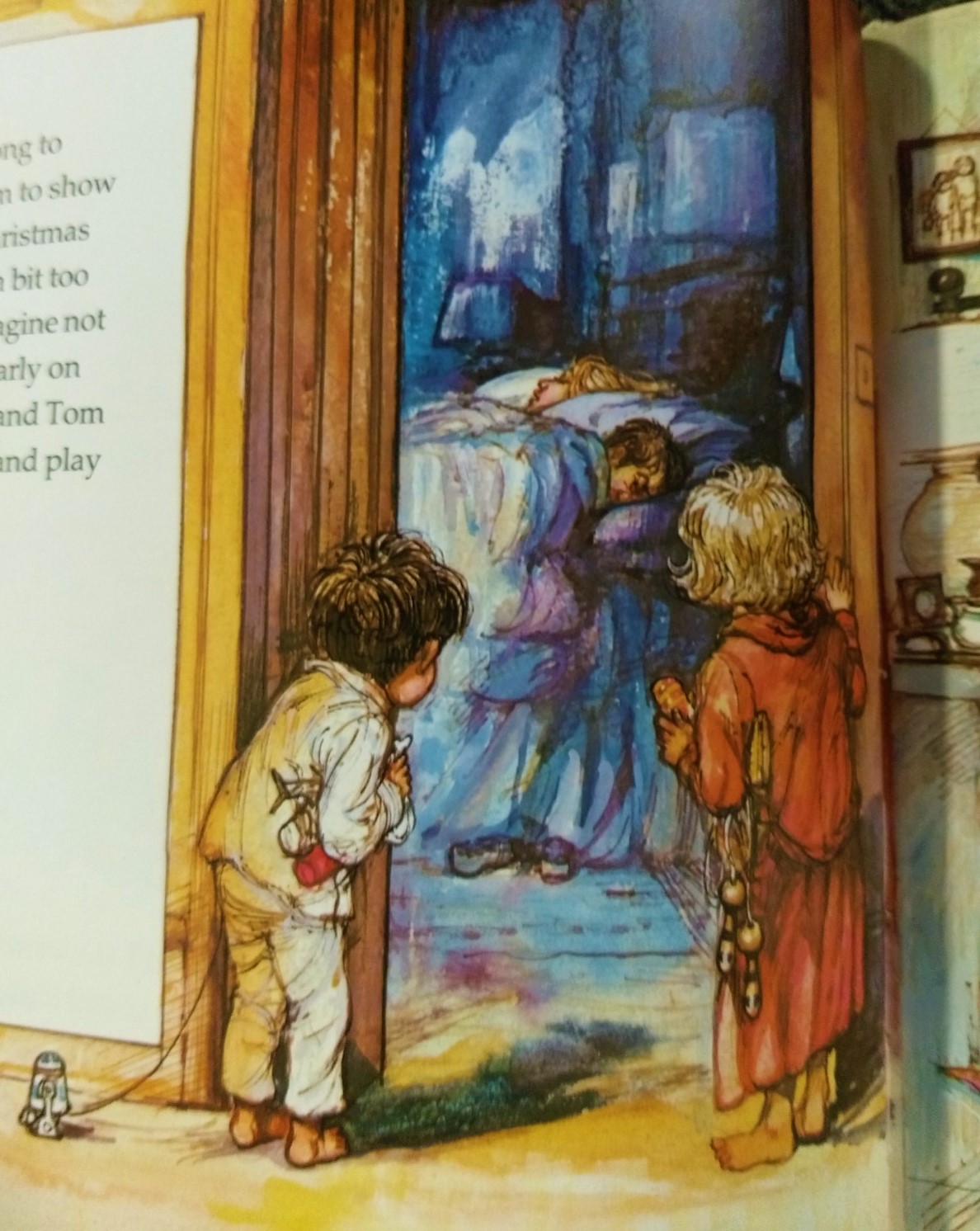
    I have a rather precious first edition hardback of this book – bought and read to me when I was little – that my daughter has now inherited and that I was very fortunate to have signed by Shirley herself. This is the Christmas picture book that I have the earliest memories of and those memories have stayed with me, mainly because of the wonderful illustrations.

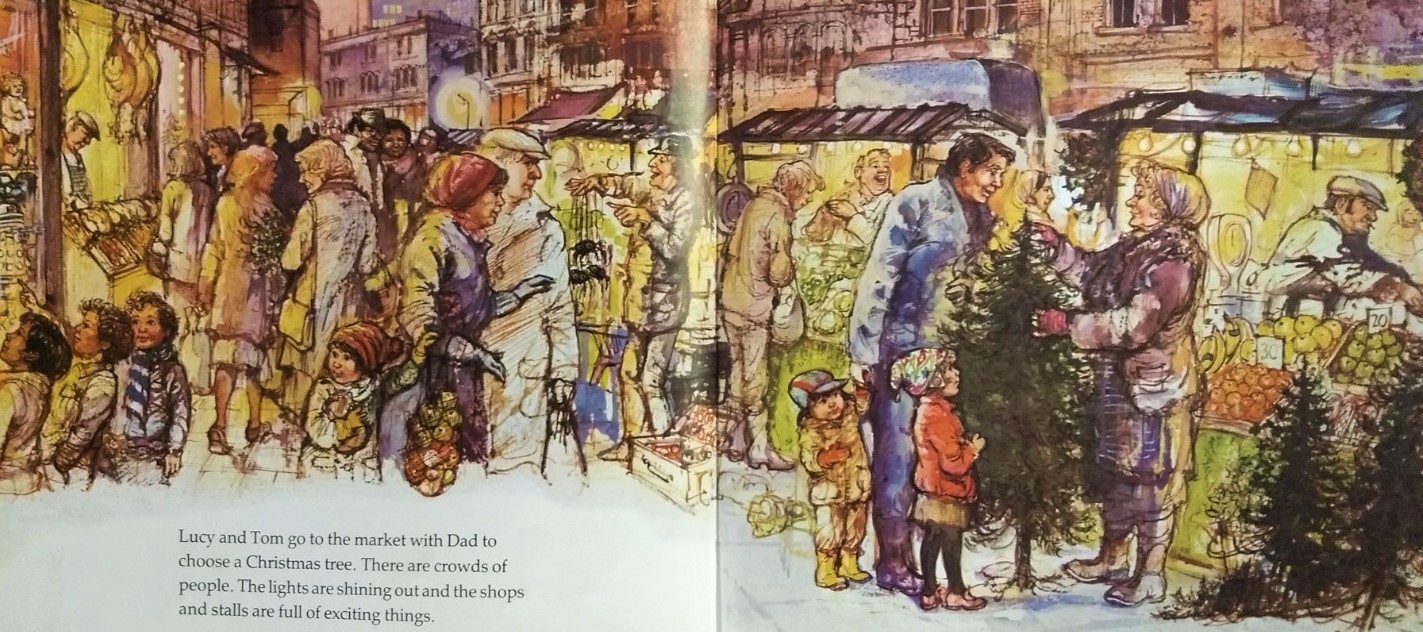
    Though children today may find it odd that the tree is being dressed on Christmas Eve, the scenes depicted in the wonderful illustrations will still be familiar to so many. I think everyone will find their own little details to latch onto – Hughes’ observation is her greatest talent and for a boy raised on ‘Star Wars’ my eye was always drawn to Tom’s gift of a pull-along R2-D2 toy, something that will still be familiar to audiences today. Another timeless scene – and probably my favourite illustration in the book – is the bustling London street market. Perhaps it’s a trick of the composition, but the trader hawking the spider puppets (leftover from Hallowe’en?) always stood out to me, and the scene is alive with characters whom you could see in any shopping street today.

    Huges’ art has a busy nature that’s often lacking in modern books now that there’s a trend for more minimal designs, and I think that this is a great shame because Christmas is a time where everything can seem too busy, too flashy, filled with so many things. These illustrations are at once cosy and reassuring, and exciting and attention grabbing, and this book will stir up memories from the adults whilst working up a frenzy of excitement from the children listening.

    Oh, and you really should play the ‘Heads, bodies and legs’ game. It’s up there with the shape game.

  • (blog) Freedom

    (blog) Freedom

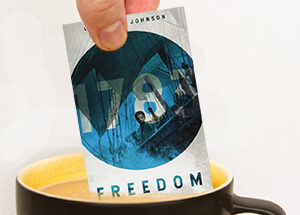
    Freedom by Catherine Johnson

    Nathaniel Barrett knows no other life than that of a boy born into slavery in Jamaica.  When he is taken to England as part of the white owner’s household he has high hopes of freedom, for England he is told is a place where everyone is free.  He has much to learn.  He is still an enslaved boy at the mercy of his cruel mistress and it is only the friendliness of some people he meets in his new adventure that keeps him hopeful.  This compelling read manages to take us to the worst and the best places.

    The writer cleverly mixes horrifying descriptions of events on a slave trader ship with the outrage shown by witnesses.  Real life characters in the abolition movement such as Olaudah Equiano and Frances Joanna Sancho are skilfully blended into the narrative which flows along at a good pace.   It’s a slice of London life, full of colourful characters with snippets of real local history thrown into the mix.  Nat experiences some misfortunes, but ultimately the book has an upbeat ending.

    What do you think?  How do you bring historical fiction into your history teaching?

  • (blog) Using books about lost toys

    (blog) Using books about lost toys

    There are plenty of picture books about toys, but some of the best are undoubtedly the ones that feature lost toys.

    The fears surrounding the loss of a favourite toy can be vivid and myriad. For the child, their toys are often the most precious things in their life (sorry, Mum and Dad), and loss of a toy is a special dread. One of the most powerful memories of my own childhood is of the time I left a beloved red matchbox sports car in a pub beer garden aged five or six (no, it wasn’t because I’d had a pint too many). I only realised that I’d left it there when we’d walked half a mile back home and my Dad had to run back to try to find it. He returned it to my tearful younger self, along with a story of how he’d found it on a picnic bench, being looked after by a group of hairy, beery, leather-clad bikers who’d been arguing over which of them the car belonged to. And from this day on, I’ve never felt intimidated by Hell’s Angels, because they’d taken care of my favourite toy..

    It was only when I became a parent myself that I realised that the trauma of the lost toy also affects the adults, for what can be done to calm the screaming child when the thing that gives them the most comfort is missing? And instead of getting to work or bed on time, the future only holds hours of tearing appart every piece of furniture in the house, and desperately re-tracing steps, and attempting to interrogate said child to find out where they left the wretched thing. For me this has involved rooms turned upside down, and a late-night trip to the train station to check that Candy Cat wasn’t lying on the tracks or  kicked under a bench covered in spilled takeaway.

    The concept of losing something precious is an important one to get to grips with, and so I’ve chosen a selection of books that I feel raise this topic in interesting ways.

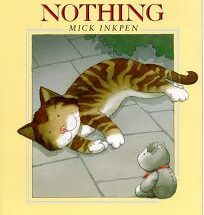
    Nothing by Mick Inkpen

    Nothing is an often overlooked book that deserves a little more attention. It’s a sweet little story about a scruffy and damaged old stuffed toy, it has forgotten who or what it is, and is left alone and unloved in the attic of a house when the owners move. The owners’ cat – less concerned (as cats are) with being left behind by the family –  helpfully carries him to their new house and deposits him with the grandfather who recognises ‘Nothing’ as his old stuffed toy kitten, Toby, lost many years ago. Nothing is lovingly repared and given to the family’s young baby who takes to Toby instantly.

    Nothing is a simple story but a lovely one that shows how the importance of a favourite toy can cross family generations and bring back so many memories, and how toys can live on beyond their original owners. To explore this theme further, The Toymaker by Martin Waddell is also a good choice.

    Dogger by Shirley Hughes

    A classic – Dogger is as much a vehicle for Hughes’ signature mastery of observational drawing, as she captures the daily life of the children and their families. The timeless quality to her artwork never ceases to amaze me, and she seems to have an uncanny ability to capture scenes and settings that even over 30 years later are perfectly recognisiable. Dogger gently introduces a great deal of drama into the loss of a toy, and children will easily identify with Dave as his family try to cope with the loss of his beloved stuffed toy. What’s really interesting is how Hughes introduces concepts that are often not addressed, such as when Dave tries to get the toy stall lady to understand that Dogger is his, and he is either ignored or can’t make himself heard. It’s a small injustice, but one familiar to any child who has failed to get an adult to understand just how important something is to them, despite how trivial it may appear. Interestingly, this injustice is not ‘solved’ – Dave loses Dogger and it takes an act of extraordinary generosity to get his toy back – though in turn the reader learns that it’s not neccessarily the biggest and best toy that really matters, it’s the one that means the most.

    Hughes tackles similar themes with ‘Bonting’, the story of Alfie and his pet rock that goes missing on the beach, though this equally lovely story is much harder to find these days.

    Knuffle Bunny and Knuffle Bunny Too by Mo Willems
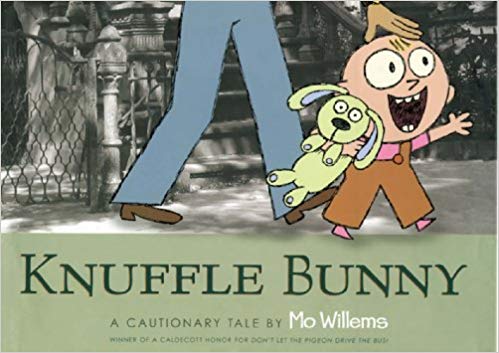
    Knuffle Bunny deals with the child’s unique expert knowledge of their toys (and conversly, the ignorance of the average parent). In the first book, the titular toy is left behind in the launderette while the toddler is left to try to explain this to dad – resorting first to baby talk and then to a tantrum. The sequel deals with a mix-up between two identical Knuffle Bunny toys at nursery, where each child’s parent takes the wrong one home. To an adult they’re indistinguishable, but to the toddlers it’s a catastrophe of epic proportions.

    These are light-hearted reads and while they don’t have full-on audience participation aka Willems’ Pigeon series, there’s plenty of voice-acting laughs to be had.

    The Paper Dolls by Julia Donaldson (art by Rebecca Cobb)

    The Paper Dolls is about impermanence and loss on many different levels. But it’s a lovely story for all of that, and beautifully illustrated by Rebecca Cobb. The dolls themselves are fragile, delicate things – the product of an afternoon’s craft play with a parent, and the choice of these dolls for characters is no coincidence, and they’re one of the best metaphors I’ve seen in children’s literature. We know these are just disposable scraps of cut and coloured paper, but they’re made with such love that they’re imbued with life and personality, and so immediately we form not just an attachment but a sense of protectiveness. There are themes here not just of love and care for a toy, but of love and care for a life in a dangerous world.

    When the Dolls themselves are innevitably lost, we’re subtly introduced – through their journey into their owners memory where they now exist, alongside a lost grandparent and long-gone pets – to not just the concept of bereavement and mourning, but of being able to overcome loss. This is where Paper Dolls stands out, the child in the story learns that things can be lost but still remain, and not only that, but – when she grows up and teaches her own daughter how to make her own paper dolls – that new things can be created that are just important and that life will go on.

    Tatty Ratty by Helen Cooper

    Tatty Ratty is lost, and (spoiler alert) isn’t coming back. Whilst I do think that for subtext and metaphor, Paper Dolls is the better book – especially in regards to the ending – Cooper’s book, though, shines at approaching the ins and outs of helping a child through the loss of her favourite toy. Molly is very worried about her toy bunny and where he is, and thorughout the book, with her Mum and Dad, she invents a series of stories about the adventures he’s having out there in the wide world. Starting off worried, Molly’s vision of Tatty Ratty gradually becomes braver and more confident, mirroring her own acceptance of him being gone. I’d have been happy if the book had ended on this note, rather like Paper Dolls. However Cooper (or perhaps her editor), decided that Tatty Ratty’s final adventure would be to return home, in time for the following day when Molly is taken to the toy shop to find ‘Tatty’ waiting for her.

    Personally, I feel this is a little too much of a ‘and she woke up and it was all a dream ending’, and de-values both her own and Tatty’s journeys through the book. It also implies (an this makes the book a bit of an odd-one-out) that toys are replaceable. In Paper Dolls, Donaldson cleverly makes the second string of paper dolls different to the first – names and all – but Tatty Ratty is one and the same. Knuffle Bunny Too is all about how children have an unbreakable bond with their toys, that no replica can replace.

    I know of no other books about dealing with loss that end in this way, and it makes it difficult to be relevant to any other topic than ‘toys’, whilst Paper Dolls especially would be an ideal recommendation for someone wanting an early book that could help a child approach the loss of a pet or a family member. On the other hand, perhaps Molly’s acceptance of her new toy simply emphasises that it’s her imaginary friend version of Tatty Ratty that’s important, and that any toy can stand in to represent him, but if this is Cooper’s intention then perhaps the story would have been more powerful without the last three pages, and had left Tatty zooming out there in Molly’s imaginary world.

    Anyhow – feel free to comment and discuss! Do lost toys books really have this much hidden depth, or am I overcomplicating things?

     

  • (blog) The ha-ha powder and other innuendo by bored writers

    (blog) The ha-ha powder and other innuendo by bored writers

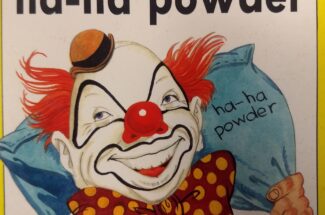
    I hate most guided reading books, and The ha-ha powder is a pretty good hint that the writers hate them just as much. Sure there’s plenty of innuendo in Biff Chip and Kipper (just what is going on in those bushes?), but Joy Cowley takes first prize with her pre-Breaking Bad tale of clowns and exactly what they need to make their party a blast.

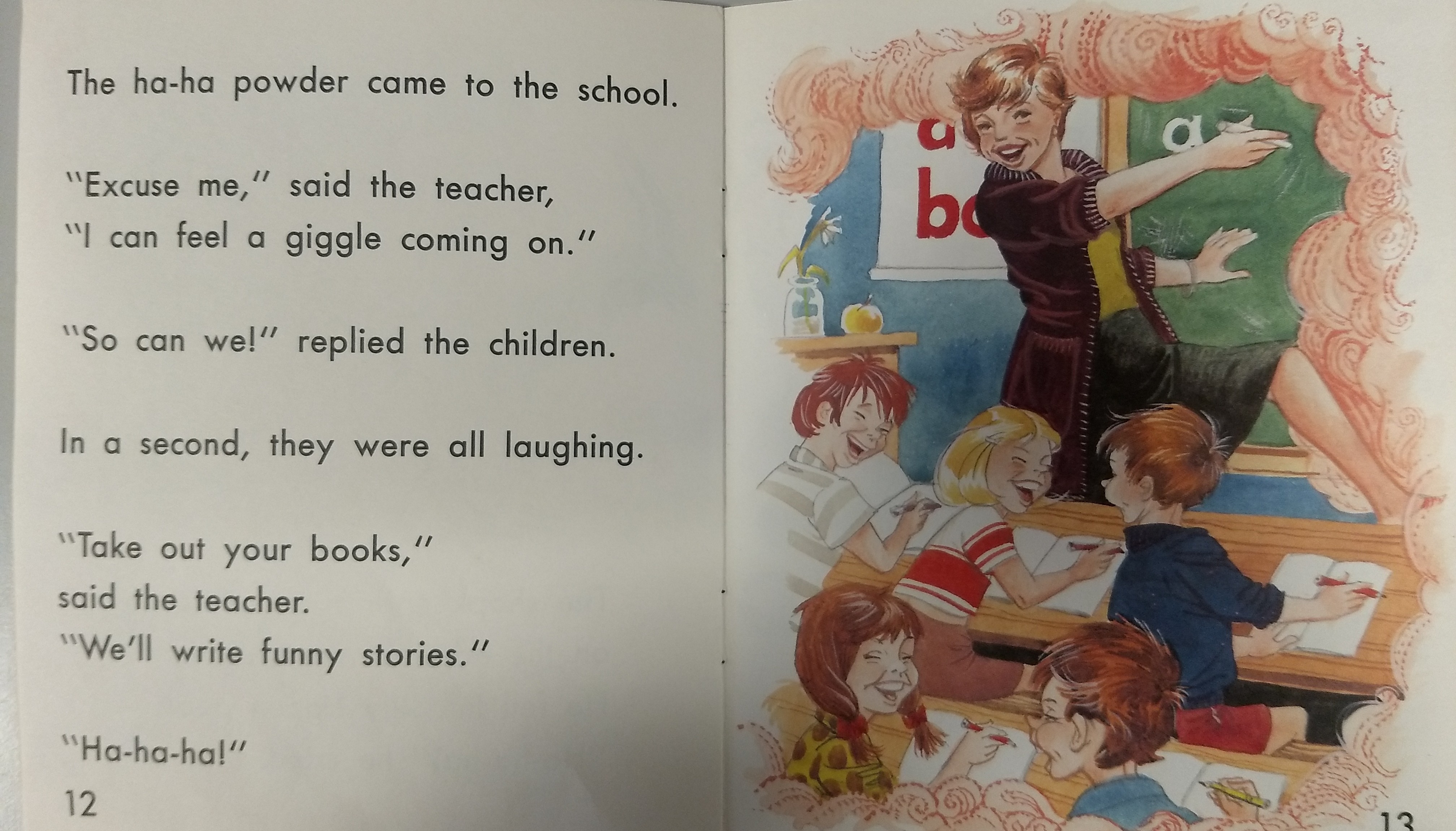
    It’s a straight-forward story of how the clowns are having a party and they order a big bag of ‘powder’ to make them all laugh. As the clown delivering the ‘powder’ is driving, the bag falls off the back of his truck and bursts. As the cloud of ‘powder’ spreads over town, everyone starts finding the most mundane things funny and even the school literacy lesson becomes more enjoyable as the teacher decides that creative writing whilst stoned is better than phonics. The kids’ writing probably improved a bit, too.

    Undoubtedly these sorts of references are just here to help keep the grown-ups sane as they plough through uninspiring English lessons, and I’m never sure how many teachers even notice some of the references in these books (swearing usually gets reported to us, but never clowns with bags of cocaine).

    Anyhow – what do you think of authors dropping adults-only references into their books, and do you have any favourites? Have your children ever spotted something that you had trouble explaining? (Harry Potter is certainly worth a childish titter in regards to certain references from Rowling to polishing wands, but I should at least try to keep this post clean)